
Our Hospital Experts Contribute to the 2026 NCC Radiation Therapy Quality Control Guideline System in China
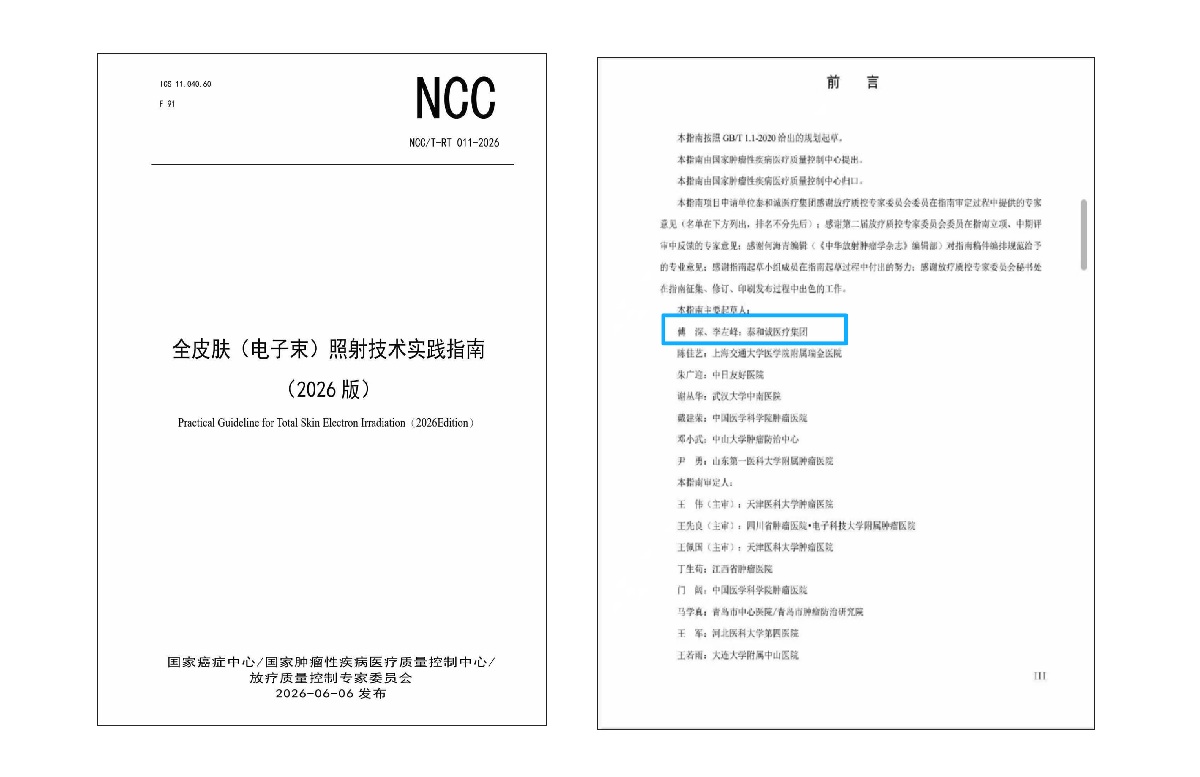 Official cover page of the "Practical Guideline for Total Skin Electron Irradiation (TSEI) — 2026 Edition", issued by the National Cancer Center of China (NCC) under document number NCC/T-RT 011–2026, released on June 6, 2026.
The National Cancer Center of China (NCC) and the Radiotherapy Quality Control Expert Committee have officially released the 2026 Radiation Therapy Quality Control Guideline System, a comprehensive national framework aimed at standardizing and improving radiotherapy practice across China.
This guideline system covers multiple key areas of modern radiation oncology, including IMRT, IGRT, stereotactic radiotherapy (SRT), image-guided adaptive radiotherapy, data management, and specialized treatment techniques.
Within this national framework, the document — "Practical Guideline for Total Skin Electron Irradiation (TSEI) (2026 Edition)" — is listed as a dedicated sub-guideline focused on the standardization of total skin electron beam therapy.
The 2026 NCC guideline system reflects China's continued advancement in radiation oncology, as precision techniques are increasingly replacing traditional radiotherapy methods and improving treatment accuracy and safety.
As part of this structured system, each sub-guideline addresses a specific technical domain to ensure standardized clinical procedures, reduced inter-institutional variability, improved treatment safety and dose accuracy, and optimized quality control across radiotherapy centers nationwide.
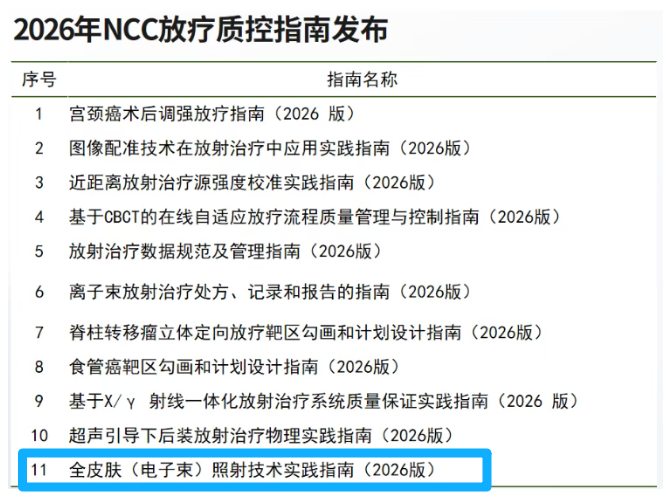 Complete list of the 2026 NCC Radiation Therapy Quality Control Guideline System, comprising 11 specialized sub-guidelines. The TSEI guideline is listed as item #11, highlighting its role as an essential component of the national framework.
Within this national framework, the TSEI technical practice guideline provides standardized recommendations for the safe and effective delivery of Total Skin Electron Irradiation, a highly specialized technique used in the treatment of extensive cutaneous malignancies.
Two senior experts from our hospital contributed to the development of this sub-guideline under the leadership of the NCC Radiotherapy Quality Control Expert Committee.
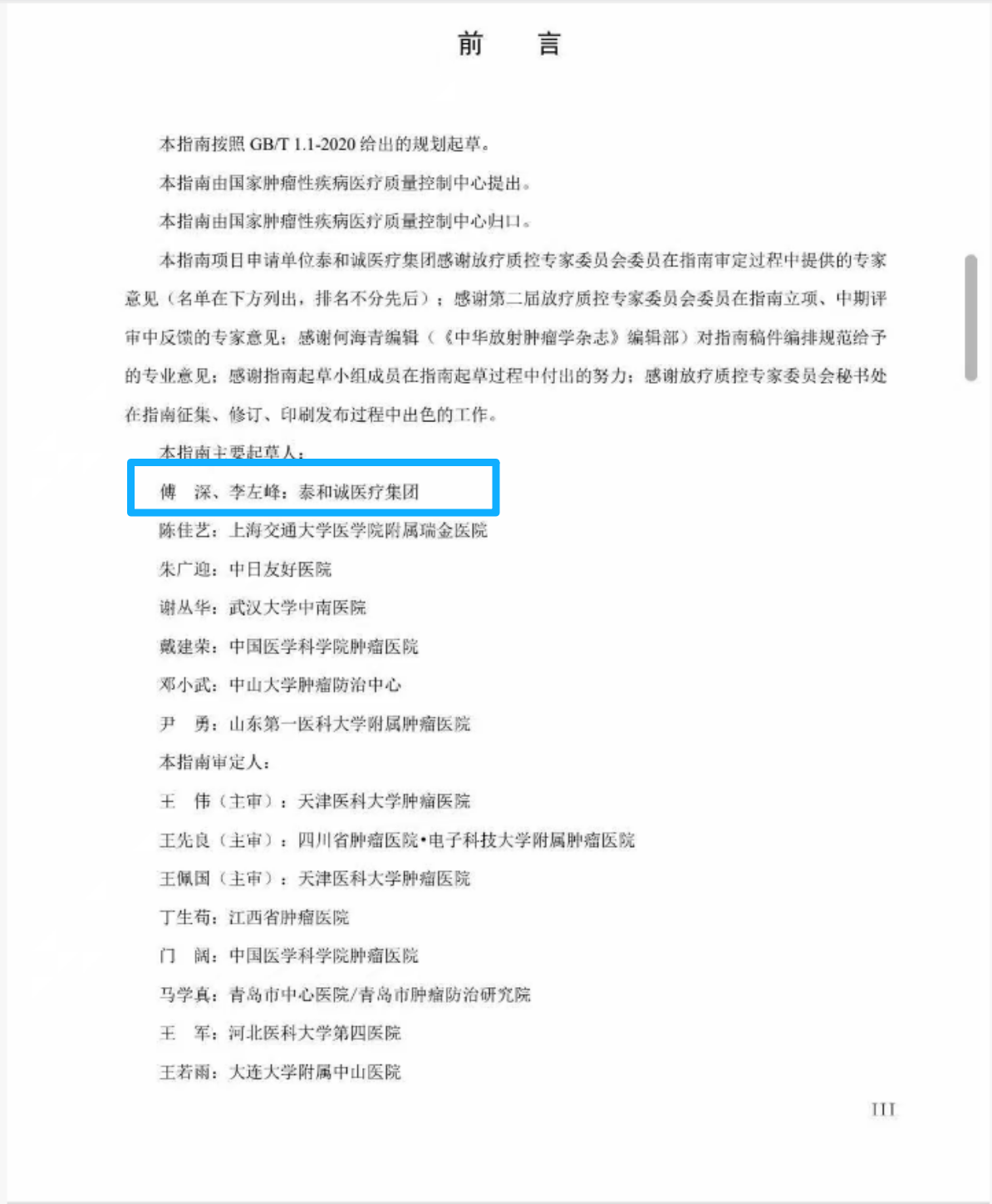 Foreword page of the TSEI guideline, listing all contributing experts. Professor Fu Shen and Professor Li Zuofeng from Concord Medical Group are recognized among the leading contributors who provided academic input during the guideline drafting process.
Their academic input supports key areas including treatment planning and beam configuration strategies, dose uniformity optimization across large skin surfaces, patient positioning and multi-field irradiation techniques, and quality assurance (QA) and safety standardization protocols.
- Treatment Planning & Beam Configuration Strategies
- Dose Uniformity Optimization Across Large Skin Surfaces
- Patient Positioning & Multi-field Irradiation Techniques
- Quality Assurance (QA) & Safety Standardization Protocols
TSEI is one of the most technically demanding radiotherapy procedures due to the need to deliver uniform radiation dose to the entire skin surface while minimizing deep tissue exposure.
The publication of this standardized guideline is expected to:
The participation of our experts in the NCC national guideline system reflects our hospital's continuous commitment to:
- Contributing to national-level oncology standards
- Advancing precision radiation therapy technologies
- Supporting clinical guideline development in specialized radiotherapy fields
- Strengthening academic collaboration within China's oncology community
This achievement further demonstrates our institution's role in the advancement of radiation oncology quality control and clinical innovation at the national level.
The NCC 2026 guideline system represents a comprehensive national effort to standardize radiotherapy practices across China, integrating modern technologies such as precision dose delivery, image guidance, and adaptive treatment strategies. Its goal is to improve treatment quality, safety, and consistency across all levels of oncology institutions.